Yemen Strikes, 8,000 Troops and the Mecca Pact: What Is Pakistan Planning?
Pakistan's role in Saudi Arabia's defence is under scrutiny after reports of Yemen strikes, an estimated 8,000 troops and the Mecca Pact.

- Published
- Reading time
- 9 minutes
Pakistan's military role in the Middle East is facing fresh attention as fighting between Saudi-backed forces and Yemen's Houthi movement intensifies. Reports about Pakistani fighter jets, an estimated 8,000 Pakistani troops in Saudi Arabia and a regional defence agreement have raised questions about Islamabad's next move.
The development comes after Saudi Arabia, Pakistan and Turkey agreed to activate their joint defence arrangement, known as the Mecca Joint Defence Agreement, in response to Houthi attacks on Saudi targets.
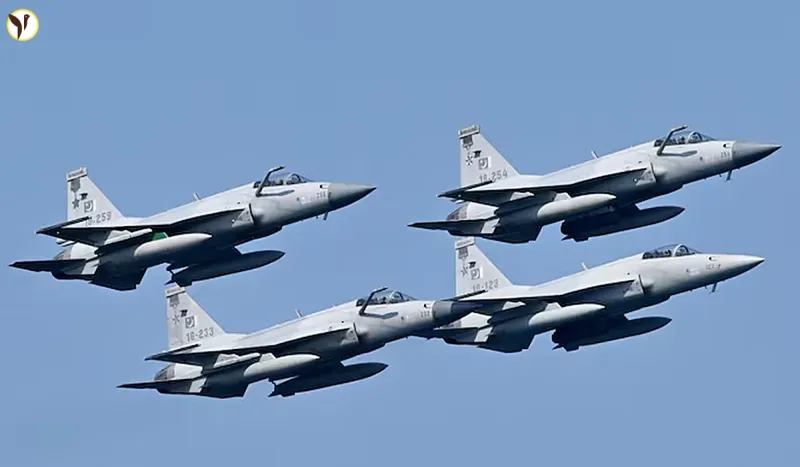
A report by The New York Times, cited by The Indian Express on October 9, said Pakistani Air Force fighter jets were being used in strikes against Houthi targets in Yemen. The report cited an unnamed senior Pakistani military official. Pakistan's military declined to comment on the reported airstrikes.
This means the reported involvement of Pakistani aircraft should be treated as a reported development, not as a fully confirmed public announcement by Pakistan's government.
At the same time, Pakistan has agreed to help strengthen Saudi Arabia's defence under the new pact. The big question is whether Islamabad will limit its role to protecting Saudi territory or become more directly involved in the conflict inside Yemen.
What Is the Mecca Pact Between Pakistan, Saudi Arabia and Turkey?
The Mecca Joint Defence Agreement is a defence arrangement signed by Saudi Arabia, Pakistan and Turkey on August 7, 2026.
The agreement is designed to strengthen security cooperation between the three countries. Its central principle is that an armed attack against one member will be treated as an attack against all members.
The agreement became a major focus after Houthi attacks on Saudi targets increased. On October 5, the three countries said they would begin implementing their collective defence commitments and ensure the rapid deployment of agreed military forces and capabilities in Saudi Arabia.
The agreement does not automatically mean that all three countries will launch offensive operations in Yemen. The countries have different political, military and legal considerations, and the precise details of their contributions have not all been made public.
Here is a quick look at the three countries and their expected roles:
|
|
|
|
|
|
|
|
|
|
|
|
|
|
|
|
Turkey's Foreign Minister Hakan Fidan said on October 8 that the agreement was defensive, not offensive. He said Turkey would not send troops to another country to carry out attacks there. This shows that the three partners may not follow exactly the same military approach.
Are 8,000 Pakistani Troops Already in Saudi Arabia?
The figure of 8,000 Pakistani troops has attracted considerable attention, but its source matters.
According to The New York Times report cited by The Indian Express, former US Army attaché and defence analyst Colonel David O. Smith estimated that around 8,000 Pakistani troops had been deployed to Saudi Arabia. He said the force included personnel from the Pakistan Air Force and Army Air Defence.
This is an analyst's estimate, not an official troop count released by Pakistan's government. Pakistani authorities have confirmed that forces are deployed in Saudi Arabia but have not publicly disclosed the exact number, locations or full mission details.
The estimated deployment is believed to support Saudi security, including the protection of important infrastructure. Oil facilities, military installations and airspace are especially important as the conflict threatens Saudi Arabia's energy and transport networks.
Pakistan has longstanding defence ties with Saudi Arabia. Its military has trained Saudi personnel for decades, and the two countries signed a separate strategic mutual defence agreement in September 2025.
However, the presence of Pakistani troops in Saudi Arabia does not, by itself, prove that all those troops are taking part in combat operations in Yemen.
Did Pakistan Air Force Jets Strike Houthi Targets in Yemen?
This is one of the most sensitive questions in the developing story.
On October 9, The Indian Express reported that The New York Times had cited an unnamed senior Pakistani military official as saying Pakistani Air Force fighter jets were being used in strikes against Yemen's Houthi movement.
The report suggested that Pakistan's contribution could focus on reducing the threat from Houthi missiles and drones, rather than sending ground troops into Yemen for a large-scale offensive.
However, the reported involvement of Pakistani aircraft has not been publicly confirmed in a detailed official statement. Pakistan's military declined to comment on the strikes report.
It is therefore important to distinguish between three things:
- Confirmed: Pakistan, Saudi Arabia and Turkey have agreed to implement their defence commitments and deploy agreed capabilities in Saudi Arabia.
- Reported: Pakistani fighter jets have reportedly been used in strikes against Houthi targets, according to unnamed sources cited by The New York Times.
- Not publicly established: The exact number of Pakistani aircraft involved, the missions they carried out, the targets hit and the full operational role of Pakistani forces.
This distinction matters because direct Pakistani participation in offensive strikes could have consequences for Islamabad's relations with Iran and its wider diplomatic position.
Why Is Saudi Arabia Seeking Military Support?
Saudi Arabia is facing a growing security challenge from Yemen's Houthi movement, which is aligned with Iran.
Recent attacks have targeted Saudi airports and other important sites. On October 9, Reuters reported that attacks on Riyadh airport had killed three people, injured others and damaged a Saudia Airlines aircraft. The attacks also led airlines to cancel flights before services gradually resumed.
Saudi Arabia has responded with airstrikes against Houthi targets in Yemen. The conflict has also intensified around strategic coastal areas and important shipping routes.
For Riyadh, the threat is not limited to military bases. Missile and drone attacks can affect airports, oil infrastructure, commercial aviation and investor confidence.
Saudi Arabia is therefore seeking help from partners that can contribute to air defence, surveillance, military equipment and other security capabilities.
Pakistan brings longstanding military ties with Saudi Arabia, while Turkey has a developed defence industry and capabilities in areas such as electronic warfare. Their support could help Saudi Arabia strengthen its defences, although the exact operational contributions remain unclear.
Why Is Pakistan Being Careful About Direct Involvement in Yemen?
Pakistan has to balance its defence partnership with Saudi Arabia against its other regional relationships and domestic political considerations.
Islamabad has a longstanding relationship with Riyadh, including military cooperation and economic ties. At the same time, Pakistan also maintains important diplomatic relations with Iran, which borders Pakistan and has links with Yemen's Houthi movement.
A direct Pakistani combat role against the Houthis could place additional pressure on those relations. It could also raise questions about how far Pakistan is willing to go under the Mecca Pact.
There is also a historical precedent. In 2015, Pakistan's parliament voted against joining the Saudi-led military intervention in Yemen. At that time, lawmakers supported neutrality in the conflict while backing the defence of Saudi territory and its holy sites.
Reuters reported on October 8 that the new deployment agreement was reached without a public parliamentary vote being disclosed. Pakistan's Information Ministry said the necessary government procedures had been followed but did not provide details of the decision-making process.
The current situation is different from 2015 because Pakistan has entered a new trilateral defence arrangement with Saudi Arabia and Turkey. Still, the question of whether its forces will engage directly in combat remains important.
Will Turkey Send Troops to Fight the Houthis?
Turkey has signalled support for Saudi Arabia's defence but has drawn a line between defensive assistance and offensive operations.
Foreign Minister Hakan Fidan said Ankara was examining how it could help Saudi Arabia, particularly through air defence, electronic warfare and technical support. He also said Turkey would not send troops to another country to carry out attacks on its territory.
Turkey's parliament has not yet formally ratified the Mecca defence pact, according to Reuters. Turkish officials have said that assistance being considered at this stage would largely be provided on a bilateral basis.
This means the pact does not necessarily require all three members to participate in the same way. Saudi Arabia could conduct operations inside Yemen while Pakistan and Turkey contribute different types of support to Saudi territory.
The arrangement's practical effect will depend on the military decisions each government makes and the legal procedures each country follows.
Could the Conflict Affect Oil Prices and International Shipping?
The conflict could have consequences beyond Saudi Arabia and Yemen.
Yemen lies close to the Bab el-Mandeb Strait, a strategic passage connecting the Red Sea with the Gulf of Aden. The route is important for commercial shipping, including vessels carrying energy supplies and other goods between Europe and Asia.
If attacks threaten shipping or force vessels to take longer routes, transport costs and delivery times could increase. Insurance costs may also rise when shipping companies consider a route too dangerous.
Saudi Arabia is also a major oil producer, so threats to its energy infrastructure can unsettle oil markets. However, the effect on prices depends on several factors, including the scale of the disruption, the duration of the conflict, available supplies and the response of other producers.
For India, which imports a large share of its crude oil, a sustained rise in global oil prices could increase the cost of imports and put pressure on fuel and transport costs. The actual impact would depend on how the conflict develops and how long any disruption lasts.
It would be premature to predict a specific price increase without clear evidence of a lasting disruption to oil production or shipping.
What Could Happen Next?
The next phase will depend on how the three countries put the Mecca Pact into practice.
Scenario 1: Pakistan focuses on Saudi defence. Islamabad could prioritise air defence, protection of critical infrastructure and support against missile and drone threats while avoiding a major ground offensive inside Yemen.
Scenario 2: Pakistan's role expands. If the attacks on Saudi Arabia intensify, Pakistan could face pressure to provide a larger military contribution. The nature of that contribution would depend on decisions by its government and military leadership.
Scenario 3: Diplomatic efforts continue alongside military measures. The three countries could combine defensive deployments with diplomatic efforts to limit further escalation. Such an approach could help reduce the risk of a wider regional conflict, although its success is uncertain.
These are possible outcomes, not confirmed plans. Pakistan has not publicly disclosed the full mission, size or duration of the forces involved.
Questions readers ask
Why is Pakistan involved in the Saudi Arabia-Yemen conflict?
Pakistan has a longstanding defence partnership with Saudi Arabia. Under the Mecca Joint Defence Agreement, the countries have agreed to strengthen collective defence in response to attacks on Saudi targets. The exact operational role of Pakistani forces has not been fully disclosed.
Did Pakistan Air Force jets strike Houthi targets in Yemen?
A report by The New York Times, cited by The Indian Express on October 9, said Pakistani fighter jets were being used in strikes against Houthi targets. Pakistan's military declined to comment, so the reported involvement has not been fully confirmed through a detailed public statement.
Are 8,000 Pakistani troops stationed in Saudi Arabia?
Around 8,000 is an estimate cited by a US defence analyst in reporting by The New York Times. Pakistan has not publicly confirmed that exact figure.
What is the Mecca Joint Defence Agreement?
It is a defence arrangement signed by Saudi Arabia, Pakistan and Turkey on August 7, 2026. Its central principle is that an armed attack against one member will be treated as an attack against all members.
Why is Saudi Arabia seeking support from Pakistan and Turkey?
Saudi Arabia is facing missile and drone threats from Yemen's Houthi movement. Pakistan and Turkey can potentially contribute military capabilities, technical support and defensive assistance.