Israel Election Results: Is Trump's Support Helping Netanyahu Take The Lead?
Israel election results show Netanyahu’s bloc leading in early counting but short of a majority. Did Trump’s endorsement help him?

- Published
- Reading time
- 6 minutes
Israel's latest election has turned into a close political contest, with Prime Minister Benjamin Netanyahu and his main rival, Gadi Eisenkot, both seeking a path to power. Early vote-counting figures have put Netanyahu's Likud party ahead among individual parties, but neither major political bloc has yet secured a clear majority in parliament.
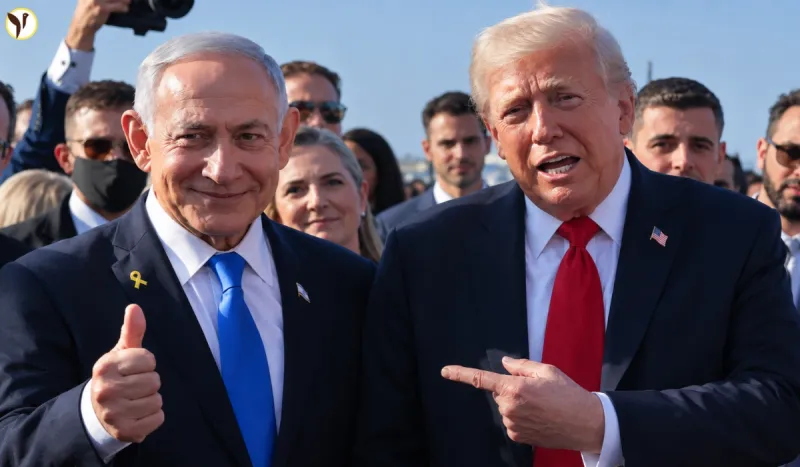
The election has also brought attention to US President Donald Trump, who publicly endorsed Netanyahu before voting day. Trump has now claimed that his support helped the Israeli prime minister perform better than expected.
But does this mean Trump has helped Netanyahu win the election? The answer is not yet clear. Early figures suggest that Netanyahu remains in the contest, but the final results and the negotiations needed to form a government will be crucial.
What Are the Latest Israel Election Results?
Israel voted on October 27, 2026, in a parliamentary election that could shape the country's political direction after years of conflict and domestic debate.
According to early reports on October 28, Netanyahu's Likud party was leading among individual parties as votes were counted. Figures reported with roughly half the votes counted put Likud at about 20.6%, ahead of Gadi Eisenkot's Yashar party at around 16.8%.
Preliminary projections also placed Netanyahu's wider bloc ahead of the opposition bloc. However, the numbers remained short of the majority needed to form a government, and the count was still underway.
This distinction is important: being the largest party does not automatically mean winning the right to govern Israel.
Israel's parliament, known as the Knesset, has 120 seats. A governing coalition generally needs the support of at least 61 members to command a majority.
Did Donald Trump Help Netanyahu in the Election?
Trump openly supported Netanyahu before the election.
On October 18, Trump gave Netanyahu what he described as his “complete and total endorsement.” He praised the Israeli leader and presented him as a strong partner in confronting Iran.
The endorsement attracted attention because Trump is a major international ally of Netanyahu. His public support gave Netanyahu an opportunity to highlight the relationship with Washington during a difficult election campaign.
After voting, Trump said his endorsement had helped Netanyahu perform better than expected. He suggested that the race had moved towards a closer result after his message of support.
However, Trump's claim is his own assessment. Election results cannot, by themselves, show how many people changed their votes because of an endorsement.
The safest conclusion is that Trump's support may have helped Netanyahu politically, but there is no confirmed evidence that it alone changed the election outcome.
Why Is Trump's Support Important?
The relationship between the US president and the Israeli prime minister matters because the United States is one of Israel's most important international partners.
Support from a US president can provide political visibility and strengthen a candidate's message on security and foreign policy. For Netanyahu, Trump's endorsement also allowed him to present himself as a leader with direct access to the White House.
But an international endorsement is only one part of an election campaign.
Voters also consider security, the economy, public services, political leadership and the government's record. In this election, Netanyahu faced criticism over security failures connected with the Hamas-led attack of October 7, 2023, as well as the wars and regional tensions that followed.
For some voters, his record on security may be a reason to support him. For others, it may be a reason to seek a change in leadership.
Who Is Gadi Eisenkot, Netanyahu's Main Rival?
Gadi Eisenkot is a former Israeli military chief who has emerged as a leading figure in the opposition contest.
His campaign has presented the election as an opportunity for political change and a different approach to national leadership. Eisenkot and other opposition figures have argued that Netanyahu should not continue as prime minister.
The opposition's challenge is not only to win votes but also to gather enough support from different parties to form a government.
Even if an opposition party performs strongly, it still needs a workable parliamentary coalition. That is why the final seat count and negotiations between parties matter as much as which party comes first.
Why Has Netanyahu Faced a Difficult Election?
Netanyahu has been one of Israel's most influential political leaders for decades, but his government has faced major challenges.
The October 7, 2023, Hamas-led attack and the subsequent war in Gaza became central issues in the debate over security and government responsibility. Netanyahu's critics have questioned the country's preparedness for the attack and called for accountability.
His supporters, meanwhile, have highlighted his security policies and leadership during conflict. Netanyahu has also promised to continue confronting threats from Iran and other adversaries.
These opposing views have helped make the election a referendum on his leadership and the direction of the country.
What Happens If No Bloc Wins 61 Seats?
If neither side secures a clear majority, the next stage will be coalition negotiations.
Israel uses a parliamentary system in which parties win seats according to their share of the vote. A party that finishes first still needs partners to build a government with sufficient support in the Knesset.
The main steps are:
- Final vote count: Election authorities must establish the official distribution of seats.
- Consultations with party leaders: Israel's president, Isaac Herzog, consults political parties about who is best placed to form a government.
- Government formation: The candidate selected to try to form a government negotiates with other parties to reach the required parliamentary support.
- Coalition agreement: Parties work out policy priorities, ministerial roles and other terms for working together.
These negotiations can take time. If no candidate can form a government, Israel could face further political uncertainty and potentially another election under the country's legal process.
Could Trump's Endorsement Change Coalition Talks?
Trump's endorsement may strengthen Netanyahu's political message, but it does not determine how the Knesset is divided.
Coalition talks depend on the number of seats won by each party and whether political leaders are willing to work together. Parties may disagree over security policy, religious issues, military-service exemptions, public spending and other priorities.
Netanyahu could still face difficulties if his bloc falls short of a majority. Likewise, the opposition would need to convince enough parties to support its candidate or a proposed government.
That means Trump's backing may influence political discussion, but the final outcome will depend on Israel's election arithmetic and coalition negotiations.
What Does the Election Mean for Israel's Future?
The result will influence Israel's leadership and policy direction at a time of continued regional tension.
The next government will face questions about national security, relations with the United States, the war and humanitarian situation in Gaza, relations with neighbouring countries, and divisions within Israeli society.
A Netanyahu-led government would likely seek to continue his existing political direction, although its policies would also depend on coalition partners.
A government led by Eisenkot or another opposition figure could signal a change in leadership and priorities. However, no major policy shift can be assumed before a government is formed and its plans become clear.
Is Netanyahu Winning the Israel Election?
It is too early to describe Netanyahu as the confirmed winner.
Early figures put Likud ahead among individual parties, and some preliminary projections placed Netanyahu's bloc ahead of the opposition. But the blocs remained short of the 61 seats needed for a majority, and vote counting was still underway.
The final outcome depends on the official seat distribution and whether Netanyahu or an opposition leader can form a government.
Questions readers ask
Who is leading in the Israel election results in 2026?
Early vote-counting reports on October 28 put Benjamin Netanyahu's Likud party ahead among individual parties. However, the overall result was still developing, and no clear winner had emerged.
Did Donald Trump endorse Benjamin Netanyahu?
Yes. Trump publicly endorsed Netanyahu on October 18, 2026, before Israel's October 27 parliamentary election.
Did Trump's support help Netanyahu win?
Trump has claimed that his endorsement helped Netanyahu perform better than expected. However, the available results do not prove that Trump's support changed voters' decisions or secured a victory.
Who is Gadi Eisenkot?
Gadi Eisenkot is a former Israeli military chief and a leading opposition figure challenging Netanyahu's political position.
How many seats are needed to form a government in Israel?
Israel's Knesset has 120 seats. A government generally needs support from at least 61 members to command a parliamentary majority.
Has Netanyahu won the election?
The early figures available on October 28 did not establish a final victory. The official count and coalition negotiations will determine who can form the next government.