Meta's $1,299 Headset Is 18 Months Away: The $349 Pair Has No Camera and Ships Oct 13
Meta announced four devices at Connect 2026. The $1,299 VR Glasses do not arrive until spring 2027 but a camera-free pair at $349 ships on 13 October.

- Published
- Reading time
- 6 minutes
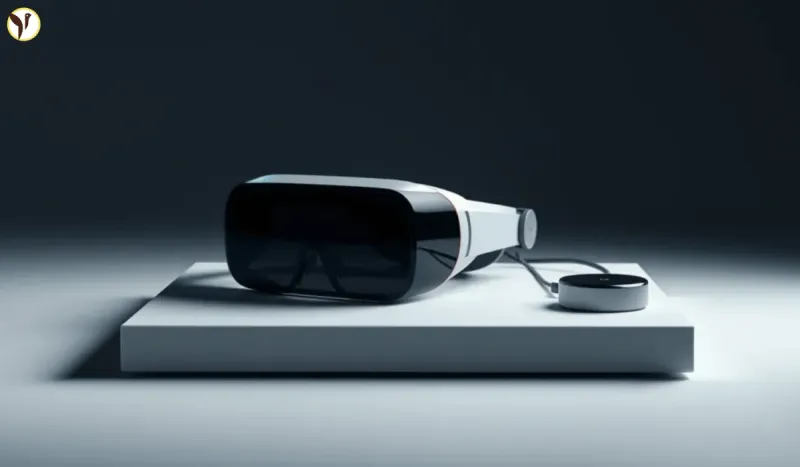
Meta announced four devices at Connect 2026: the Meta VR Glasses, a 100-gram headset priced at $1,299 that does not ship until spring 2027; Ray-Ban Meta Gen 3 smart glasses at $449, available now; Ray-Ban Meta Audio, the company's first camera-free glasses, at $349 and shipping 13 October; and Muse Charm, an AI pendant arriving this autumn with no price announced. The headline device undercuts Apple's Vision Pro on price and size by moving its processor, battery and cooling into an external pack you clip to a pocket. But the product most likely to reach ordinary buyers is the cheapest one, and the reason is that Meta finally took the camera out.
What Meta actually announced
| Device | Price | Availability |
|---|---|---|
| Ray-Ban Meta Gen 3 | $449 | Available now |
| Ray-Ban Meta Audio | $349 | Ships 13 October, pre-order open |
| Meta VR Glasses | $1,299 | Spring 2027 |
| Muse Charm | Not announced | This autumn |
Two of those you can order today. Two of them are announcements about the future.
Almost every write-up of this event will lead on the third row of that table. It is the expensive one, it has the best demo, and it is the one that picks a fight with Apple. It is also the one you cannot have for another six months at the earliest.
The camera is the story
Ray-Ban Meta Audio is Meta's first pair of smart glasses without a camera.
That sounds like a subtraction. It is the most consequential thing the company announced.
Smart glasses have had one persistent problem since Google Glass, and it is not battery life or field of view. It is that other people do not want to be filmed by your eyewear. That objection has followed every camera-equipped pair onto every train, into every gym changing room and through every restaurant. It is the reason the category has stayed niche among people who are otherwise happy to wear a computer on their face.
Removing the camera removes the objection. It also removes roughly a third of the price $349 against $449 for the Gen 3 pair and presumably a meaningful amount of weight and power draw.
What is left is audio, Meta's AI assistant, calls and messages in a normal-looking pair of Ray-Bans that nobody in the room has a reason to be uneasy about.
If smart glasses become ordinary rather than conspicuous, this is likelier to be the product that does it than the $1,299 headset and it ships on 13 October, not in spring 2027.
Now, the headset
Meta VR Glasses, known internally as Project Phoenix, is a genuine engineering departure.
It weighs 100 grams. It runs 2.4K micro-OLED displays. And it achieves that by taking almost everything out of the headset.
$META just unveiled $1,299 VR glasses weighing only 100g by moving the battery and compute into an external pack.
— Shay Boloor (@StockSavvyShay) September 23, 2026
Bigger shift is that Muse becomes the interface because Zuck says you can “just talk to it” while any flat surface can become a keyboard.
pic.twitter.com/j7K3xxtR82
The processor, cooling fan and battery live in an external puck powered by Qualcomm's Snapdragon Reality Elite chipset, which clips to a pocket or sits on a table. Meta's previous headsets put all of that on your head. Apple's Vision Pro moved only the battery off the head, keeping the compute in the visor.
This is why Meta can claim a device that looks like glasses rather than like ski goggles, and why it can undercut Apple on both price and size.
The trade-off is a cable. You are tethered to a puck. Meta is betting that people will accept a wire in exchange for not carrying 500 grams on their nose, and on the evidence of every previous headset's comfort complaints, that is not an unreasonable bet.
Meta describes the device as "a cinema, workspace, and console in one."
What it will actually do
Games. The full back catalogue of Quest titles is supported if you use controllers — the glasses are compatible with existing Quest controllers. Xbox Cloud Gaming is also supported.
Film. A new Immersive Cinema mode in the Disney+ app will carry immersive versions of Avengers: Infinity War and Star Wars: Episode IV. Live sport appears to be a significant focus.
Calling. Meta is adding full-body photorealistic VR holograms, and hologram calling is coming to Meta Ray-Ban Display glasses as well. On the evidence of the demo, this looks considerably more developed than Apple's Personas — which has been one of the Vision Pro's more mocked features.
Meta's Andrew Bosworth joked that the company had finally solved the problem of legs in VR, which anyone who has spent time in Horizon Worlds will find funnier than it sounds.
The competition is already on sale
Here is the context that makes the spring 2027 date awkward.
Valve has just released the Steam Frame, a gaming and streaming-first VR headset that runs your Steam library and standalone games. It costs $1,059 for the 256GB model and $1,299 for the 1TB version. Early units are arriving with buyers now.
So Valve is shipping a headset at exactly Meta's announced price, today, while Meta's equivalent is a slide.
Apple's Vision Pro remains more expensive and heavier. Google's Android XR platform is moving through the broader smart glasses space. And a week before Connect, another company launched its own smart glasses.
Meta has announced a very good product into a market that will look different by the time it arrives.
What this means for you
If you want smart glasses now. Ray-Ban Meta Gen 3 at $449 is available today, with longer battery life and new frame styles. Ray-Ban Meta Audio at $349 is open for pre-order and ships 13 October. The camera-free pair is the one to consider if you have ever felt self-conscious wearing a camera in public, or had someone else notice.
If you want a VR headset now. Meta's answer is not available. Quest 3 and 3S remain on sale, and Valve's Steam Frame is shipping at a comparable price if your library is on Steam.
If you were waiting for something to replace a Vision Pro. Wait longer. Spring 2027 is the earliest, announced availability dates slip, and no regional rollout beyond the initial markets has been detailed.
If you already own Quest hardware. Your game library carries over to the VR Glasses provided you use controllers, which protects the investment. That is a deliberate decision by Meta and a meaningful one for anyone with a large Quest catalogue.
If you are a developer. The compute puck architecture is the thing to plan around. A tethered processing unit changes thermal and power assumptions substantially compared with an all-in-one headset.
What to watch next
Whether spring 2027 holds. First-generation hardware with a novel architecture is exactly the kind of product that slips.
Pricing and availability for Muse Charm. Meta announced a keychain AI pendant this autumn and did not say what it costs, which usually means the answer is not finished.
Whether Ray-Ban Meta Audio sells. If a camera-free pair at $349 outsells the camera version, that tells Meta and everyone else in the category something important about why smart glasses have not gone mainstream.
Regional rollouts. Meta has expanded Ray-Ban Meta availability steadily across markets. The Audio pair at $349 is the most exportable product in the lineup.
Questions readers ask
What did Meta announce at Connect 2026?
Four hardware devices. Meta VR Glasses, a 100-gram headset priced at $1,299 and shipping in spring 2027. Ray-Ban Meta Gen 3 smart glasses at $449, available now. Ray-Ban Meta Audio, the company's first camera-free glasses, at $349 and shipping 13 October with pre-orders open. And Muse Charm, a keychain AI device arriving this autumn with no price announced.
How much do Meta VR Glasses cost and when can I buy them?
$1,299, with availability in spring 2027. They were previously known internally under the codename Project Phoenix.
What are the Meta VR Glasses specifications?
They weigh 100 grams and use 2.4K micro-OLED displays. The processor, cooling fan and battery are housed in an external puck powered by Qualcomm's Snapdragon Reality Elite chipset, which clips to a pocket or rests on a table rather than sitting on the user's head.
How do Meta VR Glasses compare with Apple Vision Pro?
They undercut the Vision Pro on both price and size. Apple's headset keeps its processing inside the visor and moves only the battery to an external pack, while Meta has moved the processor, cooling and battery into the external puck, allowing a far lighter device.
Will Meta VR Glasses play my existing Quest games?
Yes. The full back catalogue of Quest titles is supported if you use controllers, and the glasses are compatible with existing Quest controllers. Xbox Cloud Gaming is also supported.
What is Ray-Ban Meta Audio?
Meta's first pair of smart glasses without a camera, priced at $349 and shipping on 13 October, with pre-orders open. Removing the camera addresses the privacy objection that has limited smart glasses adoption, and brings the price roughly a third below the camera-equipped Gen 3 model.
How much are the new Ray-Ban Meta glasses?
Ray-Ban Meta Gen 3 starts at $449 and is available now, with longer battery life and new frame styles. Ray-Ban Meta Audio, the camera-free version, is $349 and ships on 13 October.
What is the Muse Charm?
A small pendant-style keychain device containing Meta's Muse AI assistant. It is due this autumn, and Meta has not announced pricing.
What competes with Meta VR Glasses?
Apple's Vision Pro at the premium end, Google's Android XR platform across the broader smart glasses market, and Valve's recently released Steam Frame, which costs $1,059 for the 256GB model and $1,299 for the 1TB version and is shipping to buyers now.
What is hologram calling?
Meta is adding full-body photorealistic VR holograms, with hologram calling also coming to Meta Ray-Ban Display glasses. It is Meta's equivalent of Apple's Personas feature on the Vision Pro.