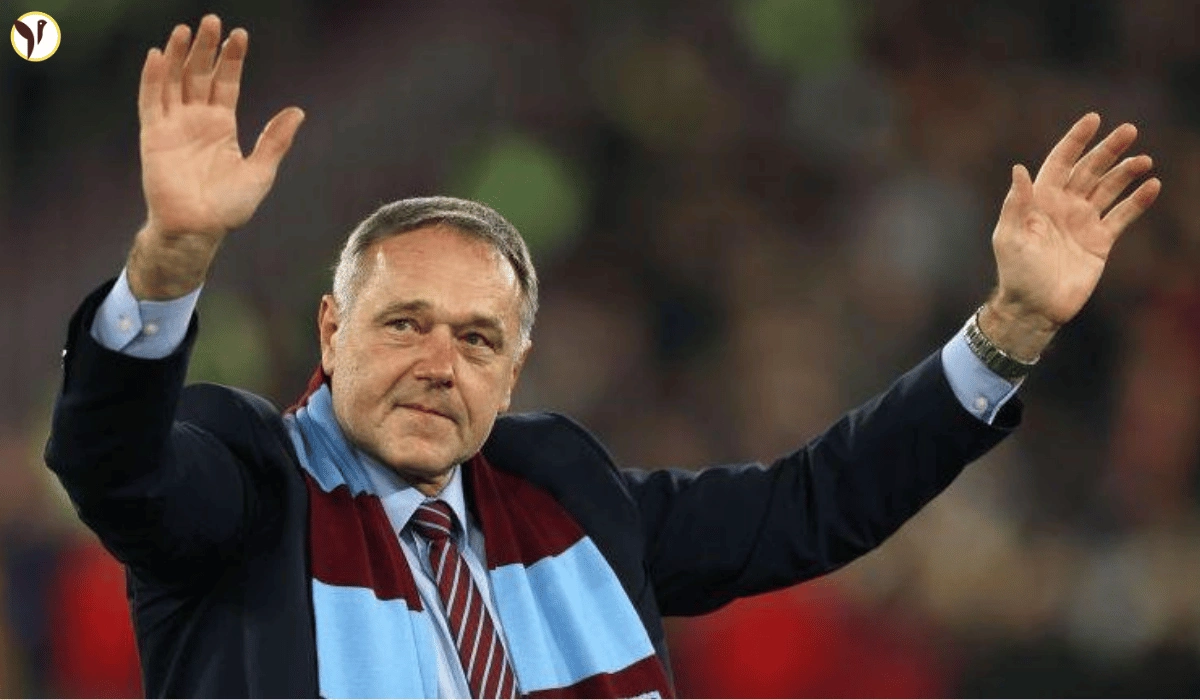



Barry Melrose has died at the age of 70.
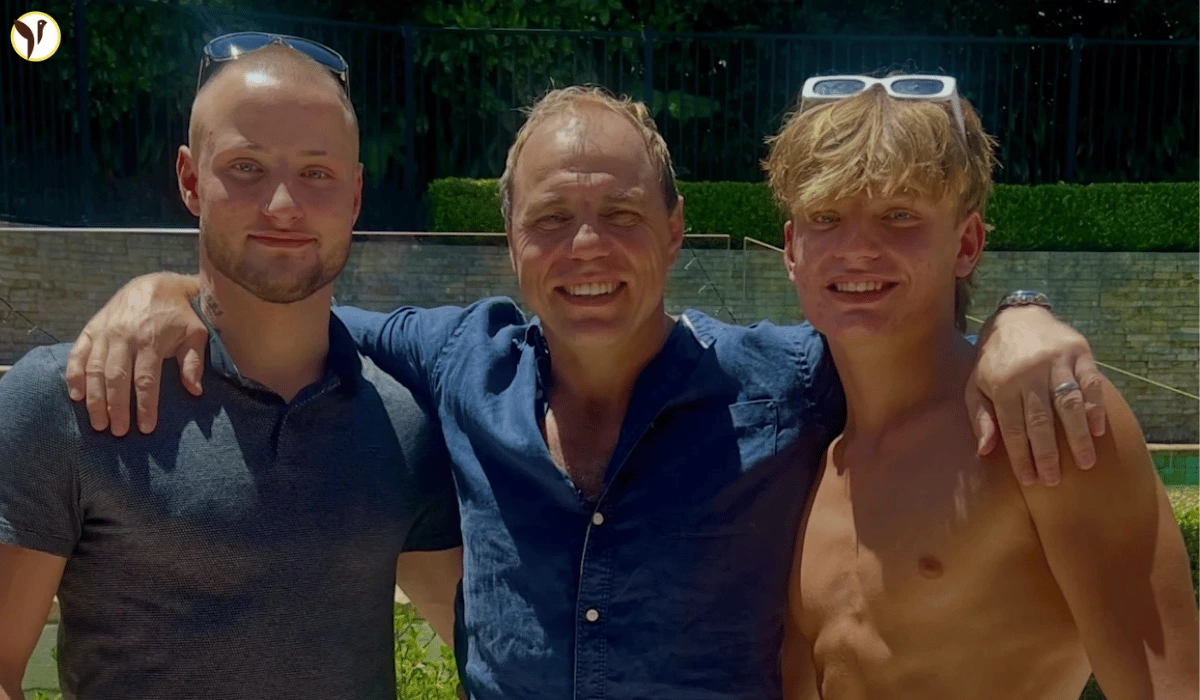
ESPN, where he spent 27 years as a hockey analyst, announced his death on Wednesday. NHL Commissioner Gary Bettman confirmed it in a statement, calling him a hockey original and sending condolences to his wife Cindy and their sons Tyrell and Adrien.
He was, for a generation of North American fans, simply what hockey looked like on television.
What has been released about his death, and what hasn't
No cause of death has been given.
This needs stating clearly, because it is among the most-searched questions about him today and because the honest answer is being blurred elsewhere.
Melrose announced in October 2023 that he had been diagnosed with Parkinson's disease, and retired from ESPN. That is a matter of public record he disclosed it himself, and it is entirely proper to report.
What has not been said by anyone is that the two are connected. ESPN's statement did not give a cause. Bettman's statement did not give a cause. His family has not released one. Some coverage has placed the diagnosis directly alongside his death in a way that invites a conclusion nobody has drawn, and readers should treat any specific cause circulating today with caution unless it comes from his family.
It is entirely possible no cause will ever be made public. Families are under no obligation to release one.
He announced his diagnosis on opening night
The way Melrose left broadcasting says a good deal about him.
He made the announcement on 10 October 2023 the day the NHL season opened, and on ESPN's own SportsCenter. He was 67.
"It's now time to hang up my skates and focus on my health," he said in his statement, adding that he had been given more than fifty extraordinary years playing, coaching and analysing the game, that he was grateful for almost thirty of them at ESPN, and that he would be cheering from the stands.
Wayne Gretzky said at the time that Melrose was "bigger than any team."
There is a symmetry to it that is hard to miss. He announced his illness on the first night of a hockey season, and he died in the days before another one began.
One extraordinary season, and a losing record
Melrose's coaching career is remembered for a single year, and the fuller picture is more interesting than the highlight.
He was hired by the Los Angeles Kings for the 1992-93 season. It was his first job as an NHL head coach. He took a Gretzky-led Kings team to the Stanley Cup Final the first in the franchise's history where they lost to Montreal.
That would be a career for most people. It was Melrose's opening act.
The rest did not follow the same arc. He finished with an NHL head coaching record of 84 wins, 108 losses, 29 ties and four overtime losses, including a brief and unhappy return to the bench with the Tampa Bay Lightning at the start of the 2008-09 season. He had earlier won an AHL Calder Cup with the Adirondack Red Wings in 1992.
So the man most people think of as a coach spent rather more of his coaching life losing than winning. That is worth saying plainly, because it makes what came next more impressive rather than less.
A tough player from a tiny hockey town
Before any of it, he was a defenceman, and not a gifted one.
Melrose was born in Kelvington, Saskatchewan, a prairie town of well under a thousand people that has sent an improbable number of players to the NHL, among them Wendel Clark and Joe Kocur.
He turned professional with the Cincinnati Stingers of the World Hockey Association in 1976, spending three seasons there and playing his last alongside a teenaged Mark Messier. When the WHA folded, he moved to the NHL, playing for the Winnipeg Jets, the Toronto Maple Leafs and the Detroit Red Wings.
His NHL numbers tell you exactly what kind of player he was: 300 regular-season games, 10 goals, 23 assists, and 728 penalty minutes. His plus-minus was minus 119. He was a rugged, physical defenceman who fought and blocked and made himself useful, and who was never going to be a star.
That background is why his broadcasting worked. He talked about the game like someone who had done the unglamorous parts of it, because he had.
Twenty-seven years, and a mullet that became a brand
Melrose joined ESPN in 1996 and stayed until 2023.
He was instantly identifiable: the slicked-back hair, the goatee, the expensive suits with the wide lapels, the cigars. It was a look, and he knew it was a look, and he committed to it entirely at a time when sports broadcasting was becoming increasingly interchangeable.
But the appearance is not why he lasted nearly three decades. ESPN's statement described his knowledge as deep and his candour as refreshing, and both were true. He explained hockey without condescending to people who did not know it and without flattering people who did. In a sport that has always struggled to hold casual American attention, Melrose was frequently the reason someone kept watching.
For millions of viewers who never played the game, he was the person who taught them how to watch it.
The tributes
John Buccigross, who worked alongside him at ESPN, called Melrose his best friend at the network and a big-brother figure of rock-solid values. He wrote that he was "shook to my core", and noted where the news reached him at a hockey rink in Las Vegas, preparing for the coming season.
He described that as chilling and fitting, because the rink was where Melrose belonged.
Bettman's statement dwelt on the same thing everyone else did: that you were fortunate to run into him at a rink, more fortunate still if you got him talking, and that he never once failed to make you love hockey a little more than you had before.
Melrose is survived by his wife Cindy and their sons, Tyrell and Adrien.