
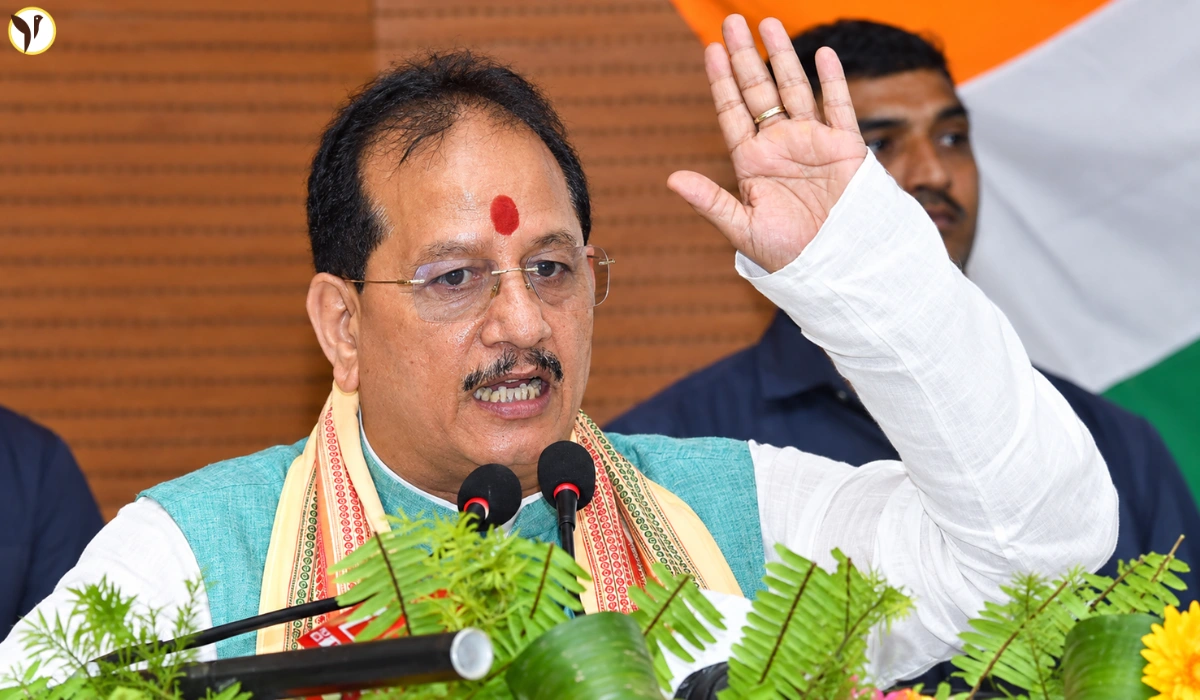


Patna: Bihar is looking at a wider approach to increase the income of farmers, with Agriculture Minister Vijay Kumar Sinha highlighting horticulture, integrated farming, processing and exports as important areas for the state's agriculture sector.
The focus is not only on increasing farm production but also on helping farmers earn more from what they produce.
Sinha has said that for Bihar's small and marginal farmers, depending only on traditional crop farming may not be enough to increase income significantly. The government is therefore looking at other agriculture-related activities that can give farmers additional sources of earnings.
Why Bihar Is Looking Beyond Traditional Farming
A large number of farmers in Bihar operate on small landholdings. For such farmers, increasing income only by expanding crop production can be difficult.
The government's approach is to encourage farmers to combine traditional crops with activities such as horticulture, mushroom cultivation and integrated farming.
Integrated farming can allow farmers to use the same land and resources for different activities. This can create multiple sources of income instead of depending on a single crop.
Sinha has also stressed the need to train farmers and young people in new agriculture-related activities across different districts of Bihar.
Horticulture Could Become a Bigger Income Source
Horticulture is another major part of Bihar's agriculture strategy.
The state has already seen growing interest in fruits and other high-value agricultural products. Earlier this year, Sinha highlighted the potential of horticulture and said better market access could help farmers get stronger returns.
Bihar has also been working to increase exports of agricultural products. Mangoes and litchi from the state have been sent to international markets, while infrastructure such as export pack houses is being developed to support agricultural exports.
This creates an opportunity for farmers to move from simply producing crops to becoming part of a larger value chain.
From Farm Produce to Processed Products
Another important part of the government's approach is food processing and packaging.
Selling raw agricultural produce is only one stage of the agriculture business. Processing, packaging and branding can create additional value before a product reaches consumers.
This is particularly important for Bihar because the state has several agricultural products with strong regional identity.
The government has previously highlighted food processing as an important way to increase the value of farm produce and create more opportunities around agriculture.
Bihar's Makhana Shows the Export Opportunity
Mithila Makhana is one example of how Bihar's agricultural products can reach international markets.
In August 2026, APEDA facilitated the first commercial sea shipment of GI-tagged Mithila Makhana from Bihar to Australia. The shipment was 18 metric tonnes and was sourced directly from farmers in Darbhanga.
According to APEDA, the export-oriented supply chain helped farmers receive nearly 18% higher returns than prevailing market rates.
The development is significant because it shows how better packaging, processing and direct access to international markets can affect the value received from farm produce.
For Bihar, the challenge will be to develop similar market connections for more agricultural products.
Farmer ID and Digital Records Also Part of the Plan
Along with changes in farming and marketing, Bihar is also working on digital farmer records.
The state government has been working on Farmer Registry and Farmer ID under the AgriStack initiative. Agriculture Minister Vijay Sinha recently said that more than 53 lakh farmer registries had already been prepared in Bihar.
The purpose is to make it easier to identify farmers and deliver government schemes and benefits.
Digital records can also help improve the system for providing agricultural support such as subsidies, seeds and other benefits to eligible farmers.
बाढ़ का पानी कम होने के बाद प्रभावित क्षेत्रों में फसल क्षति का विस्तृत आकलन शुरू किया जाएगा। वास्तविक नुकसान का सही आंकलन कर प्रभावित किसानों को सहायता उपलब्ध कराने का प्रयास किया जाएगा।
— Vijay Kumar Sinha (@VijayKrSinhaBih) September 18, 2026
किसानों को फसल क्षतिपूर्ति और हरसंभव सहायता समय पर उपलब्ध कराने के लिए आवश्यक कार्रवाई… pic.twitter.com/VfpGktPjFc
What This Could Mean for Bihar Farmers
The larger idea behind the government's approach is to make agriculture more than just crop production.
The focus areas include:
- Horticulture and high-value crops
- Integrated farming
- Mushroom cultivation
- Food processing
- Better packaging
- Domestic and international markets
- Farmer registration and digital records
- Better access to government schemes
If these areas are developed together, farmers could have more ways to earn from the same agricultural activity.
However, the results will depend on implementation, market access, infrastructure, training and the ability of farmers to actually participate in these new opportunities.
Bihar's Agriculture Strategy Is Moving Towards Value Addition
For Bihar, increasing farmer income will require more than simply increasing production.
The state's agricultural products need better processing, storage, packaging and market connections. Export opportunities can also become important where Bihar has products with strong demand outside the state and country.
The recent Makhana export is one example of this approach, while horticulture and integrated farming are being promoted as additional ways to improve income opportunities for small farmers.
The success of this strategy will ultimately depend on how effectively these plans reach farmers at the ground level.