School Assembly News Nov 4: PM Modi's 500 GW Plan Could Change India's Future
School Assembly News November 4: PM Narendra Modi has announced plans to add another 500 GW of non-fossil energy capacity in 10–11 years. Know what this means for India's future.

- Published
- Reading time
- 6 minutes
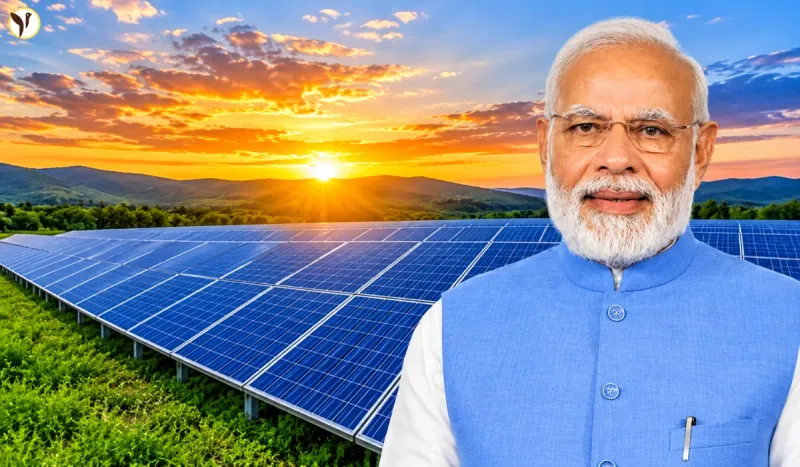
India is taking another major step towards becoming a clean energy-powered nation. Prime Minister Narendra Modi has announced an ambitious plan to add another 500 gigawatts (GW) of non-fossil fuel-based electricity capacity over the next 10 to 11 years.
The announcement was made on November 2, 2026, while inaugurating the Bharat Renewable Energy Summit and Expo 2026 in New Delhi. The Prime Minister said that clean energy would play an important role in India's energy security, economic growth and future development.
The announcement comes as India continues to work towards its existing target of achieving 500 GW of non-fossil fuel-based installed power capacity by 2030. With nearly 300 GW already achieved, the country is making progress towards its clean energy ambitions.
What Is PM Modi's New 500 GW Energy Plan?
During the renewable energy summit, PM Modi said India would aim to add another 500 GW of new non-fossil energy capacity over the next 10 to 11 years.
This is an additional ambition, separate from the existing target of reaching 500 GW of non-fossil fuel capacity by 2030.
The Prime Minister expressed confidence in India's ability to achieve the goal, even though he described it as challenging. He also highlighted the country's progress in solar and renewable energy.
The plan is expected to support India's long-term move towards cleaner electricity and reduce its dependence on traditional fossil fuels.
It is important to understand that non-fossil energy capacity includes sources such as solar, wind, hydropower and nuclear power. Therefore, the 500 GW figure does not refer only to solar or wind energy.
India Has Already Crossed 300 GW Of Non-Fossil Energy Capacity
India has made significant progress in expanding its clean energy capacity.
According to the Ministry of New and Renewable Energy, the country crossed 300 GW of installed non-fossil fuel-based electricity capacity by July 31, 2026. The total stood at 300.50 GW, representing more than 60% of the 500 GW target for 2030.
The official figures included:
- Solar power: 164.59 GW
- Wind power: 58.14 GW
- Large and small hydropower: 57.24 GW
- Bio-power: 11.75 GW
- Nuclear power: 8.78 GW
Solar energy has become one of the biggest contributors to India's clean energy growth. The government also reported that the country added a record 55.29 GW of non-fossil capacity during the 2025–26 financial year.
Why Is Clean Energy Important For India's Future?
Clean energy is important because India needs a reliable electricity supply to support its growing population, industries, businesses and cities.
Traditional energy sources such as coal and oil create pollution and depend on fuel supplies that can be affected by international conflicts and changing prices.
Solar and wind energy can help India reduce some of these risks. They also support the country's efforts to reduce carbon emissions and build a more sustainable economy.
At the renewable energy summit, PM Modi said that energy security was directly connected to economic security. He highlighted how investments in clean energy had helped India manage global disruptions, including the ongoing West Asia crisis.
How Can The 500 GW Plan Benefit Common People?
The expansion of clean energy is not only about building large solar parks or wind farms. It can also create benefits for ordinary households, farmers and small businesses.
Lower Electricity Bills
Rooftop solar panels can help households generate their own electricity and reduce their dependence on power supplied through the grid.
The PM Surya Ghar Muft Bijli Yojana aims to support rooftop solar installations in one crore households. At the summit, the Prime Minister said more than 65 lakh households had already joined the programme.
Prime Minister of India
Support For Farmers
Solar-powered irrigation pumps can help farmers access electricity for agricultural activities. The PM-KUSUM scheme is supporting the use of solar energy in agriculture.
According to the Prime Minister's remarks, more than 30 lakh farmers have received solar irrigation support under the scheme.
Prime Minister of India
More Employment Opportunities
The growth of the renewable energy industry can create jobs in solar panel manufacturing, wind power projects, construction, maintenance, research and technology.
It can also encourage young people to develop skills in engineering, electrical systems and clean energy innovation.
Better Energy Security
Producing more electricity from domestic renewable sources can help India reduce its dependence on imported fossil fuels. This could make the country's energy supply more resilient during international crises.
Government Focuses On Solar Power And Green Energy Manufacturing
The government is also working to increase domestic production of solar equipment.
At the summit, PM Modi highlighted that India's solar module manufacturing capacity had grown from around 2 GW a decade ago to more than 200 GW. Solar cell manufacturing capacity has also expanded to nearly 40 GW.
This development is important because domestic manufacturing can support India's energy plans and reduce dependence on imported equipment.
The government is also promoting the National Green Hydrogen Mission, which aims to develop green hydrogen production and its use in industries and transport.
Prime Minister of India
India Needs Huge Investments To Reach Its 2030 Target
Achieving the 500 GW target will require large investments in renewable energy projects and electricity infrastructure.
According to a Reuters report published on October 28, India needs around $220 billion in clean energy investment over the next three years to expand renewable power and strengthen its electricity grid.
The investment will be needed in solar and wind power, battery storage, green hydrogen and transmission infrastructure.
This shows that producing clean electricity is only one part of the challenge. India must also build systems to store electricity and transport it from renewable energy projects to homes, farms and industries.
Why Is Energy Storage Important?
Solar and wind power depend on natural conditions. Solar panels generate electricity during daylight, while wind turbines need suitable wind conditions.
This means electricity production can change throughout the day. Energy storage systems, including batteries and pumped-storage hydropower, can help store extra electricity and supply it when demand is high or renewable generation is low.
India will need stronger electricity networks and storage facilities to make its clean energy expansion reliable.
PM Modi also highlighted the importance of Green Energy Corridors, which help transport renewable electricity from areas with high solar and wind production to other parts of the country.
What Does This Plan Mean For India's Future?
The new 500 GW ambition could create opportunities across several sectors of the Indian economy.
More investment in renewable energy may support manufacturing, research, infrastructure development and employment. It could also help India strengthen its position in the global clean energy market.
For students, this shift may create new career opportunities in renewable energy engineering, battery technology, environmental science and green hydrogen research.
However, achieving the target will not be easy. India will need continuous investment, modern technology, reliable electricity storage and cooperation between central and state governments.
The success of the plan will depend on how effectively these challenges are addressed over the coming years.
PM Modi's announcement of adding another 500 GW of non-fossil energy capacity over the next 10 to 11 years highlights India's growing focus on clean energy and energy security.
The country has already crossed 300 GW of non-fossil capacity and is working towards its existing 500 GW target for 2030.
From lower electricity bills and solar-powered farming to manufacturing growth and new employment opportunities, the clean energy transition could influence many parts of India's future.
The challenge now is to turn these ambitious targets into reliable electricity, stronger infrastructure and long-term benefits for people across the country.
Questions readers ask
What is PM Modi's new 500 GW energy plan?
PM Modi has announced that India will aim to add another 500 GW of non-fossil energy capacity over the next 10 to 11 years.
What is India's existing 500 GW target?
India aims to achieve 500 GW of installed non-fossil fuel-based electricity capacity by 2030.
How much non-fossil energy capacity has India achieved?
India crossed 300.50 GW of installed non-fossil energy capacity by July 31, 2026, according to the Ministry of New and Renewable Energy.
Which energy sources are included in the 500 GW target?
The target includes solar, wind, hydropower, bio-power and nuclear energy.
How can the 500 GW plan benefit common people?
It could support lower household electricity bills, solar-powered farming, better energy security and more employment opportunities.