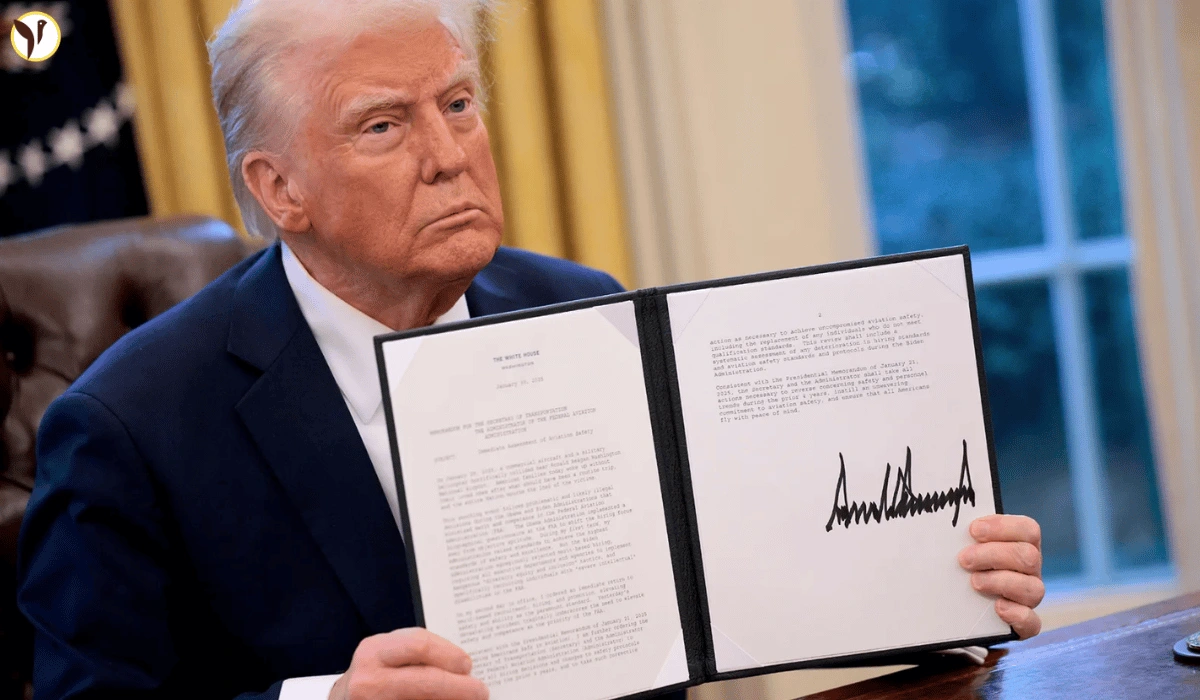


The US Treasury Department has proposed a rule that would strip private schools and colleges of their tax-exempt status if they give targeted help to students based on race.
It was announced on Thursday. It covers admissions, scholarships and facilities, and the proposal states plainly that race-based benefits in those areas would be incompatible with holding tax-exempt status. Treasury and the IRS estimate that up to 18,000 private schools, colleges and other educational institutions could fall within its scope.
Before anything else, one point that a lot of the coverage has buried.
This is not law yet
The rule is a proposal, not a regulation in force.
Federal rules of this kind go through a notice-and-comment process. The proposal is published, the public and affected institutions submit comments, the agency reviews them, and only then is a final version issued which can differ from the draft, sometimes substantially. Rules also get withdrawn, and rules of this profile almost always get sued.
Even if it is finalised as written, it would take effect after May 2027.
So nothing has changed for any student, donor or school today. If you have seen posts saying colleges have lost their tax-exempt status, that is wrong. What has happened is that the government has said what it intends to do and started the clock on the process for doing it.
That matters practically: the comment period is the window in which institutions, donors and members of the public can formally object or support, and those comments become part of the record any future court reviews.
What the rule would actually do
American private universities have been exempt from many taxes for more than a century, on the principle that they serve a public good. For large institutions the exemption is worth millions of dollars annually on endowment income, property, and the deductibility of donations.
The proposal would condition that status on not providing race-targeted benefits. Announcing it, Treasury Secretary Scott Bessent signalled that simply renaming programmes would not be enough, saying that recasting race-based preferences as equitable or inclusive "does not change their discriminatory nature."
That sentence is doing a lot of work, and both sides know it. It means the rule is not aimed only at programmes labelled DEI. It reaches successor programmes too.
The context is a broader campaign. Scores of universities have already closed or rebranded DEI offices and ended minority-focused scholarships and student groups under federal pressure. The Justice Department has separately opened investigations into several medical schools. Conservative legal groups have filed civil rights complaints against scholarship programmes at institutions including the University of Oregon, the University of Alabama, Bowdoin College and roughly twenty others. Some state attorneys general have threatened private universities' nonprofit status directly.
The case for the rule
Supporters make four arguments, and they are worth stating at full strength rather than in caricature.
It follows the Supreme Court. In 2023, the Court ended race-conscious admissions at American universities. Supporters argue that scholarships, targeted programmes and race-conscious support services are a route around that ruling, and that closing it is simply enforcing what the Court decided.
Tax exemption is a subsidy, not a right. Exemption costs the public money. Supporters argue the government is entitled to set conditions on which institutions receive it, and that the condition here is straightforward: do not allocate benefits by race.
The precedent is already established. In 1983, the Supreme Court upheld the IRS's decision to deny tax-exempt status to Bob Jones University over its ban on interracial dating. The principle was that an institution practising racial discrimination does not serve a charitable purpose. Supporters argue that principle does not have a racial direction built into it discrimination is discrimination.
Some students are disadvantaged by these programmes. Trump officials have relied on Civil Rights-era statutes, arguing that race-targeted programmes disadvantage white and Asian American applicants. This is not a fringe position; the 2023 Supreme Court case was brought substantially on behalf of Asian American applicants who argued they were held to a higher standard.
The case against the rule
Critics make arguments that are equally substantive.
Bob Jones may not stretch this far. This is the strongest legal objection. Bob Jones concerned a school excluding people on the basis of race. The programmes targeted here are designed to include people. Critics argue that treating a scholarship for underrepresented students as legally equivalent to a ban on interracial dating inverts the purpose of the precedent rather than applying it. Courts will have to decide, and this is where the litigation will concentrate.
The vagueness is the problem, not the principle. Tim Powers of the National Association of Independent Colleges and Universities said institutions are committed to complying with civil rights law, but warned the proposal could create new compliance burdens and legal uncertainty for schools already operating within existing non-discrimination rules. When the standard extends to programmes that were renamed, institutions cannot easily tell what is safe. The predictable response is to cut more than the rule requires.
Donations take the hit first. Marjorie Hass, president of the Council of Independent Colleges, said the change would most likely affect donations, which are frequently earmarked for scholarships. Much American student aid at private institutions flows from restricted gifts written years ago. If those terms are now a tax liability, the money does not simply get redirected some of it stops.
Access narrows for the students with the fewest options. Mike Gavin of the Alliance for Higher Education described the proposal as an attack on the ability of working-class Americans and people of colour to reach higher education. The argument is that the students who rely on targeted scholarships are disproportionately those without family resources to fall back on, and removing that aid does not make admissions neutral it makes them more dependent on wealth.
It puts the IRS in a political position. Federal law prohibits the IRS from targeting organisations for ideological reasons, and officials are barred from directing IRS investigations. Critics argue that a rule drafted explicitly around a political campaign against what the President calls wokeness invites exactly the kind of enforcement the statute was written to prevent.
Who this actually hits
The Harvard headlines are misleading about the shape of this.
Harvard is the political symbol the President threatened its tax-exempt status during his fight with the university last year, and the imagery of the fight is Ivy League. But 18,000 institutions is not a list of universities. The overwhelming majority of that number is private K-12 schools, including a great many small religious and independent schools with no endowment, no legal department, and no capacity to absorb a tax bill or a compliance fight.
For a wealthy university, losing tax exemption is a severe financial blow that it has lawyers to contest. For a small private school, the uncertainty alone may be enough to end a scholarship programme pre-emptively.
Several questions the proposal does not clearly resolve will surface during the comment period. Among them: how it applies to historically Black colleges and universities, most of the best-known of which are private institutions; how it treats programmes serving Native American students, who occupy a distinct legal category rooted in tribal sovereignty rather than race; and how it interacts with religious schools' existing constitutional protections. Expect these to dominate the comments filed.
Why this matters outside the United States
For international students and their families, the practical question is what happens to the aid landscape.
Race-targeted scholarships in the American system are overwhelmingly aimed at domestic minority students, so the direct effect on international applicants is limited. The indirect effects are not. If institutions respond to legal uncertainty by narrowing aid programmes broadly rather than surgically, the total pool of institutional aid can shrink. And the administration's stated rationale explicitly invokes Asian American applicants, a group that includes many students of Indian origin, and whose treatment in elite admissions was central to the 2023 Supreme Court case.
That cuts in more than one direction depending on who you ask, which is precisely why it is worth watching rather than predicting.
What to watch next
The comment period. Who files, how many, and what they say. This is the record any court will review, and unusually, it is a stage where ordinary people can participate rather than just observe.
Whether the final rule narrows. Agencies frequently soften a proposal between draft and final version. If the definition of a covered programme tightens, the practical impact falls sharply.
The first lawsuit. Almost certain. Watch which institution brings it and which circuit it lands in, because that shapes the timeline more than the merits do.
Pre-emptive closures. The rule does not take effect until after May 2027, but institutions act on risk, not on effective dates. Programmes will start disappearing well before then, and that is the effect that will show up in students' lives first.