

When an incoming airline chief executive stands in front of employees and says safety comes first, it usually means very little. The phrase is standard issue. Every CEO says it, particularly after an accident.
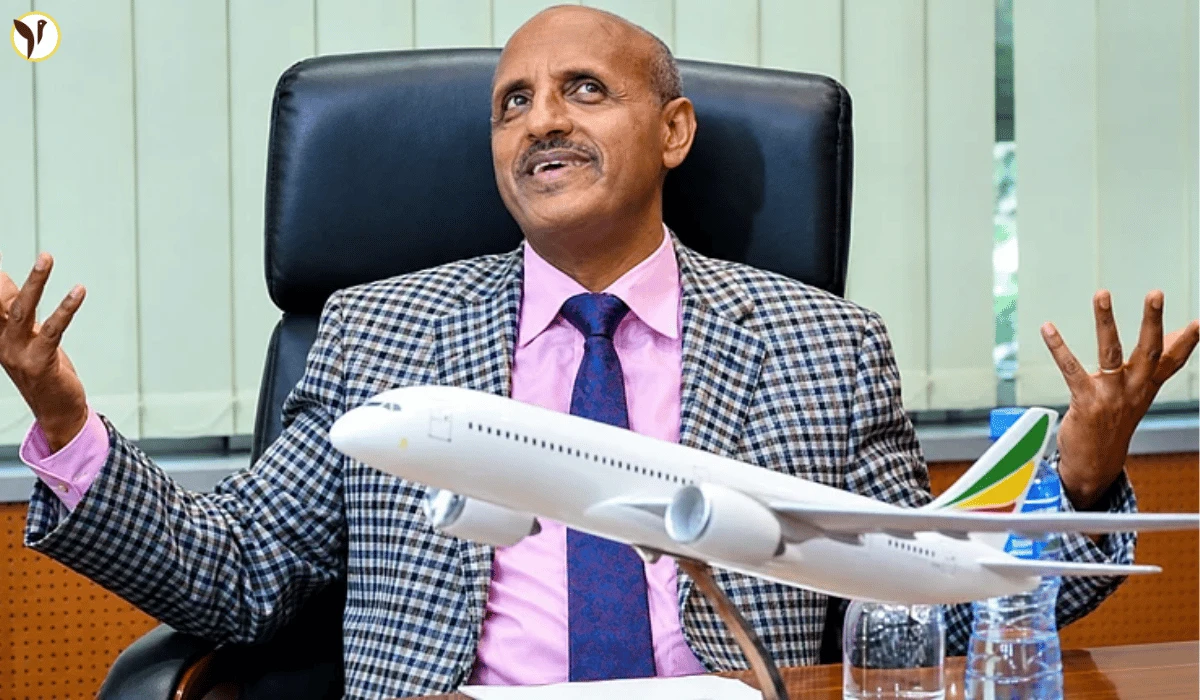
Tewolde Gebremariam said it at an Air India town hall on Sunday. In his case there is a reason to take it differently.
On 10 March 2019, Ethiopian Airlines Flight 302 crashed six minutes after taking off from Addis Ababa, killing all 157 people on board. Gebremariam was the airline's group chief executive. He went to the crash site himself and confirmed there were no survivors. Then he grounded Ethiopian's remaining Boeing 737 MAX aircraft — before regulators in most major markets ordered the same thing.
He is now taking charge of an airline that is 15 months past the deadliest aviation disaster the world has seen in a decade.
What he told employees
Gebremariam addressed Air India staff on 7 September alongside chairman N Chandrasekaran and outgoing chief executive Campbell Wilson. He takes over formally once regulatory approvals come through.
His stated priorities were three: safety, operational reliability, and rebuilding customer confidence.
On safety, his framing was cultural rather than procedural. A safety-first culture has to be the airline's number one priority, he said, and it is not enough to state it — it has to be lived daily and applied consistently across the organisation. He asked employees to speak up whenever something did not look right, and promised an open-door policy.
On operations, he was deliberately unglamorous. Operational excellence, he said, means getting the basics right every day: departures on time, arrivals on time, bags delivered, aircraft clean. Customer experience, in his formulation, is a function of operational excellence rather than a separate initiative.
Then came the line that gave the day its headlines. Noting that he was arriving from the United States, he said he would borrow a phrase — MAGA — and that the airline would make Air India great again.
It landed as a joke. The scale of what sits behind it is not funny at all.
The state of what he is inheriting
Air India is under sustained regulatory and public scrutiny.
In June 2025, flight AI171 crashed at Ahmedabad, killing 260 people. In the aftermath, regulators flagged a series of failures that went well beyond a single accident: aircraft flown without emergency equipment checks, delays in replacing engine parts, forged maintenance records, and shortcomings in how crew fatigue was managed.
The pressure has not eased since. In August this year, a Phuket–Delhi flight suffered a sudden loss of altitude. On 4 September, three days before the town hall, Air India dismissed the pilot-in-command of that flight after he tested positive for a psychoactive substance.
The financial picture is no easier. Air India reported revenue of about ₹61,080 crore in FY25 against a net loss of roughly ₹3,976 crore. The airline operates a fleet of 189 aircraft to 87 destinations, and is jointly owned by the Tata Group and Singapore Airlines.
So the job is not one thing. It is a safety credibility problem, an operational reliability problem and a profitability problem, and they are entangled — the fixes for the first two cost money the third does not currently generate.
Why his record is the story
Gebremariam spent nearly four decades at Ethiopian Airlines. He joined in 1985 as a traffic officer, became chief operating officer in 2006, and served as group chief executive from 2011 to 2022. Under his leadership Ethiopian became Africa's largest and most successful carrier. He has most recently been a senior strategic advisor at Delta Air Lines.
But it is the crisis record that matters for this appointment.
After ET302, Gebremariam did not defend the aircraft or wait for consensus. He grounded his MAX fleet immediately. He publicly pushed Boeing to review the entire flight control system rather than just the MCAS software believed to have caused the two crashes. He said Ethiopian would be the last airline to return the MAX to service, not the first. And he said plainly that two fatal accidents on a brand-new aircraft type within five months was not normal.
Less than a year later, the pandemic shut down global passenger aviation and he had to manage that too.
There is a second, quieter reason he fits. In the 1990s, Gebremariam was Ethiopian Airlines' regional director for India, based in Mumbai. When he told employees he remembered Air India as one of the leading names in the industry, he was describing something he saw at close range as a competitor. His stated ambition is to restore that standing.
The transition
Campbell Wilson leaves after roughly four years, having arrived from a 26-year career at Singapore Airlines. His tenure covered the structural work: the Vistara merger, fleet expansion, and an overhaul of systems and operations. His term was due to run to mid-2027, but Air India's board began searching for a successor in January, with safety scrutiny cited as the backdrop.
Wilson told employees the transformation was not finished and said he would remain the airline's biggest supporter from outside. Gebremariam was appointed in August following a global search for someone with experience in airline turnarounds, operational excellence, safety and profitable growth.
The framing from the airline is that Air India is moving out of the restructuring phase and into an execution phase. That is a reasonable description. It is also a convenient one, because execution is exactly where the last year's failures showed up.
What this means for you
If you fly Air India, the metric worth watching is not announcements but on-time performance and baggage delivery over the next two quarters. Gebremariam has explicitly named those as his measures. If they do not move, the culture change has not happened either.
If you work in aviation or want to, the demand signal here is safety and quality assurance, maintenance oversight and operations. The regulatory findings after AI171 pointed at record-keeping, parts management and fatigue systems. Those are process and compliance roles, not glamorous ones, and they are where an airline under this much scrutiny has to hire.
If you follow the Tata Group, this appointment says something about how the group now reads the problem. Wilson was a commercial and integration leader. Gebremariam is an operations and safety leader who has been tested in a crisis. That is a deliberate change in the kind of person they think the job needs.
If you are simply watching from outside, be careful about the timeline. Turning an airline's safety culture around is measured in years, not quarters, and Gebremariam has not formally taken charge yet.
The test
The slogan will be quoted for a week. What will actually matter is a smaller, harder thing.
Gebremariam asked Air India employees to speak up when something looks wrong. In an organisation where regulators found forged maintenance records, that request is not a pleasantry. It is the entire job description.
Whether people believe him enough to do it and whether the answer they get is thanks rather than trouble will determine everything else on his list.